

Market News · ahmed alhajri · August 22, 2026
Vatican plans €100 million agrivoltaic energy plant near Rome
Elite Academy Desk — here is a clear take on the latest market development for traders following the story.
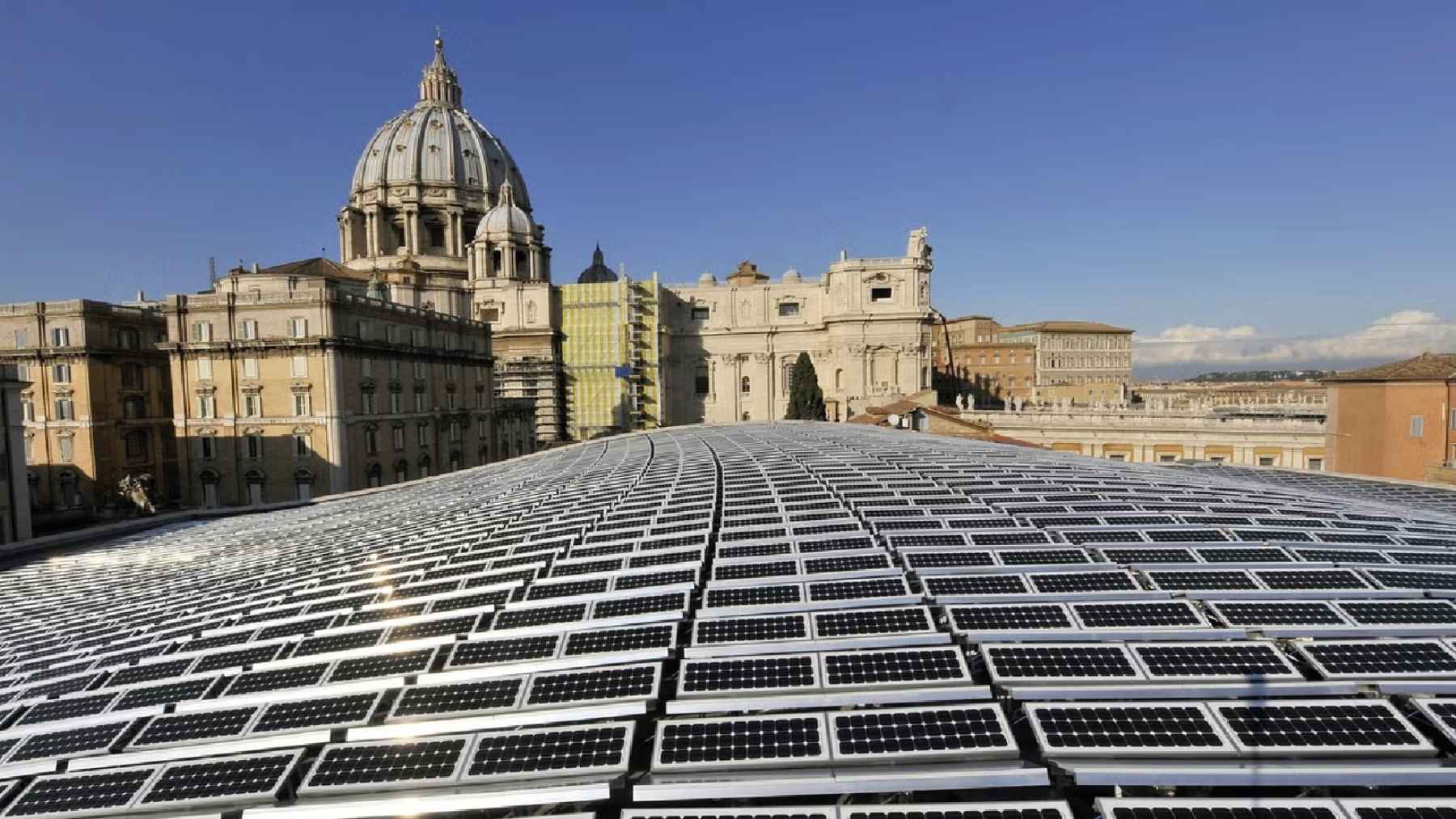
Putting solar panels on land you already own is usually a matter of paperwork and a phone call. You get a permit, you hire someone to bolt the racking down, and you sign whatever the utility puts in front of you so the meter runs both ways. Most of the fight is with a zoning board. The Vatican has been working on this since June 2024, and last Tuesday it got as far as a first committee meeting. On August 4, officials from the Italian government and the Holy See sat down in the Sala Verde at Palazzo Chigi for the opening session of a joint committee whose entire job is to oversee the building of one solar farm. Not a fleet of them. One. The Italian side alone brought chiefs of staff and technical representatives from the foreign ministry, the interior ministry, the culture ministry and the environment and energy security ministry, plus the Lazio Region, the city of Rome, the national energy regulator ARERA, grid operator Terna and the utility Acea. That is the machinery it takes when the country buying the panels is 44 hectares of walled city and the field they are going on sits in somebody else’s territory. The land is at Santa Maria di Galeria, north of Rome, and it is Vatican property under a 1951 agreement with the Italian state. It runs to 424 hectares, about 1,048 acres, which makes it close to ten times the size of Vatican City itself. It has been the transmission site for Vatican Radio since 1957, when Pius XII inaugurated a broadcast center with a transmitter hall designed by Pier Luigi Nervi. The shortwave service still runs from there today, on a published schedule of directional antennas beaming at Africa, Asia and the Americas. The site is extraterritorial, which sounds like a technicality until you try to sell electricity across the fence. Power generated on Holy See land and pushed onto the Italian grid is an international transaction, and Italy does not hand out grid connections to foreign sovereigns on a standard form. So the two states negotiated one. Archbishop Paul Richard Gallagher, the Holy See’s Secretary for Relations with States, signed an agreement with Italy’s ambassador to the Vatican, Francesco Di Nitto, at Palazzo Borromeo on July 31, 2025. The Italian parliament then ratified it through Law 52 of April 1, 2026, published in the official gazette three weeks later, and the whole thing entered into force on May 27, 2026 , once both sides finished the procedures in Article 5. Italy’s foreign ministry confirmed the entry into force the following day . Roughly two years and two popes to reach the point where an installer could theoretically show up. The financial terms were never published in full, but the Associated Press noted the shape of them at signing. The Vatican is exempt from Italian taxes on importing the panels. It also does not get the incentives an Italian homeowner or business collects for going solar, which leaves the Holy See in the odd position of being the only landowner in the country who can bring the hardware in duty-free and then has nobody to send the rebate paperwork to. Italy gets something concrete out of it too. Under the arrangement, the country can count the field toward its European Union clean energy targets , which is a neat trick given the electricity is destined for a state that is not in the EU. Officials speaking anonymously to AP put the build cost at under 100 million euros, about $114 million, and said any power generated beyond the Vatican’s own needs would go to the surrounding community. Contracts were expected to go out for bids once the Italian parliament signed off, which it now has. Francis started this with an apostolic letter called Fratello Sole , dated June 21, 2024, the summer solstice. It ordered an agrivoltaic plant at Santa Maria di Galeria that would cover the radio station’s power draw and the “complete energy sustenance” of Vatican City State, and it made the heads of the Governorate and of APSA, the office that manages Holy See property, extraordinary commissioners with the authority to get it done. Leo XIV took the next step on June 1 this year, signing a chirograph that created the Fratello Sole Foundation and approved its statutes on the spot. Sister Raffaella Petrini, president of the Governorate, was named foundation president for the first three years, with APSA president Archbishop Giordano Piccinotti as vice president. Th
Related articles
- Oil Market Analysis – Wednesday, October 14, 2026
- Gold Analysis – Wednesday, October 14, 2026
- Key Economic News – Wednesday, October 14, 2026
- iOCO Announces Strong H2 2026 Earnings While Stock Stays Flat
- Big Yellow Shares Rally 5% as Ancora Urges Sale of UK Storage Giant
- LSEG Teams Up with Nvidia to Speed Up Historical Market Data Retrieval