
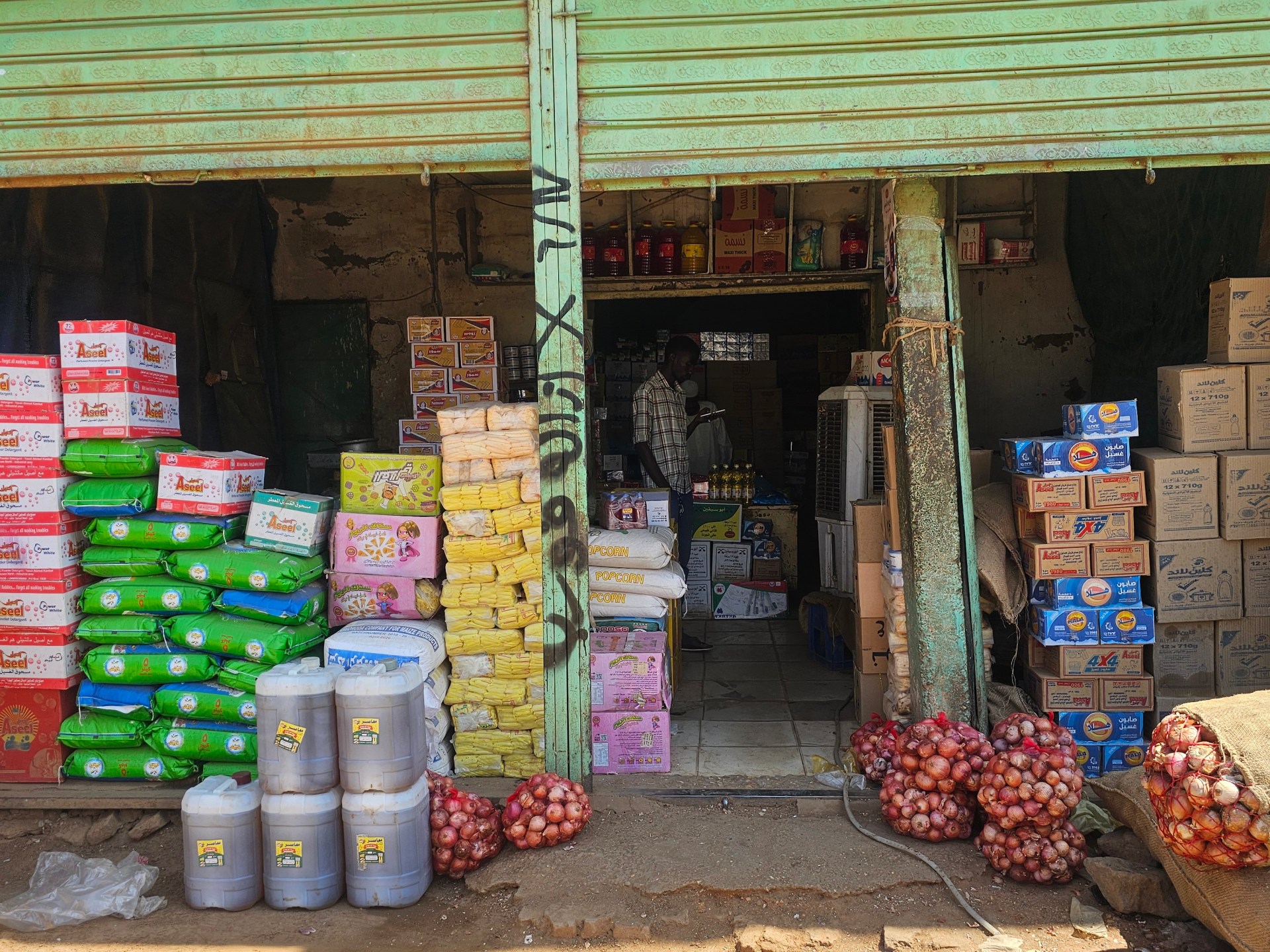

In the Omdurman market, Mohammed Al‑Bashri no longer shops for his family’s needs once a week as he did before the war broke out. With rising living costs and a decline in his purchasing power, he was forced to cut back his shopping list and began visiting the market daily to buy the groceries his family needs.
In an effort to reduce pressure on foreign currency and encourage local production, the Sudanese Council of Ministers issued a decision in April last year banning the import of 46 goods described as luxurious and unnecessary. At a time when the national currency was experiencing continuous depreciation against foreign currencies, the decision sparked objections from importers, who warned of its repercussions on the availability of goods and trade flows.
After about six months, the Sovereign Council Chairman Abdel Fattah al‑Burhan directed the cancellation of the Council of Ministers’ decision, before Prime Minister Kamel Idris issued Decision No. 95 for 2026 on 26 October, lifting the ban on 44 items. This coincided with a decision to exempt a number of essential food items from customs duties and taxes, a step aimed at easing the cost of living and meeting citizens’ needs.
Attention is now focused on Sudanese markets following these directives, amid anticipation of their impact on the availability and prices of goods. However, the effect of the measure remains tied to other factors, foremost among them the exchange rate of the Sudanese pound against the dollar and import and transport costs. These measures bring the price and availability of goods back to the forefront of economic debate in Sudan.
The list of goods from which the import ban was lifted included food and consumer items and building materials, such as rice, Egyptian beans, dairy products, processed meats, and fish, as well as vegetables, fruits, cement, ceramics, textiles, furniture, car accessories, and cosmetics.
The lifting of the ban comes at a time when the Sudanese pound is facing increasing pressure against the dollar, as the U.S. dollar exceeded 10,000 Sudanese pounds in the parallel market during the past October, amid a decline in the local currency’s value and a rise in the cost of obtaining foreign currency.