

Market News · reuters.com · September 10, 2026
Xi's India visit to help diplomatic thaw, but business ties bound by suspicion
reuters.com
By Shivangi Acharya, Sarita Chaganti Singh and Mei Mei Chu
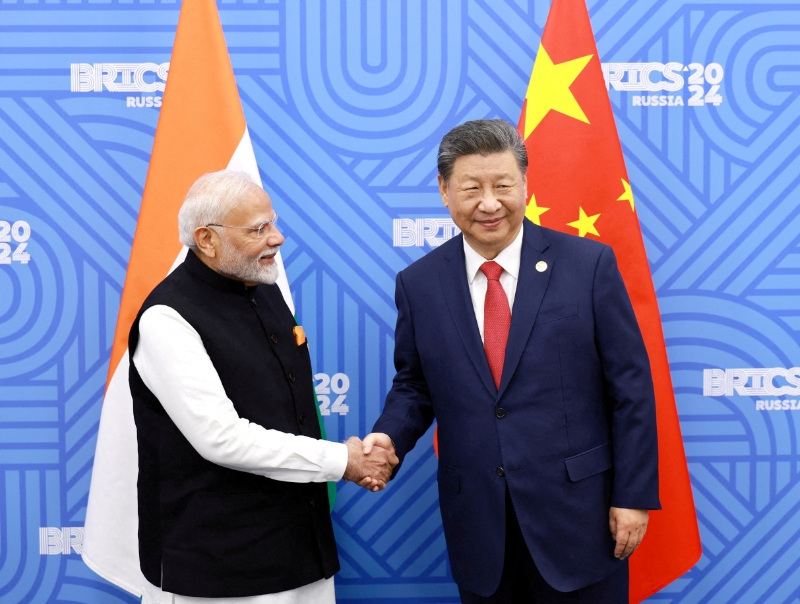
NEW DELHI/BEIJING, Sept 10 (Reuters) - Chinese President Xi Jinping’s much-anticipated visit to New Delhi this week, his first to India in seven years, should further the diplomatic thaw between the giant neighbours, but there are few signs as yet that their business ties will improve.
Businesses in both countries continue to face hurdles, including investments stalled by regulations, visa delays and restrictions on industrial equipment, underlining the gap between diplomatic progress and economic ties, analysts say.
While Xi is widely expected to be in Delhi this weekend for the annual BRICS summit, Beijing is yet to confirm his visit, and there is no word if he will have a meeting with Indian Prime Minister Narendra Modi, which will be crucial to set the future direction of bilateral ties.
China and India fought a brief war in 1962, setting the backdrop for a wary relationship since then, which soured after a 2020 border skirmish killed 20 Indian and four Chinese soldiers. Still, ties have improved in recent years, especially since Modi visited China last year and as both nations grapple with volatile relationships with the U.S.
“China certainly wants to improve ties, but we are waiting to see to what extent India is actually willing to improve them,” said Lin Minwang, a South Asia expert with Shanghai’s Fudan University and former diplomat at the Chinese Embassy in New Delhi, suggesting that any dramatic progress was unlikely.
Harsh Pant, vice president at New Delhi’s Observer Research Foundation think tank, said the “trust deficit” between the countries was high.
He added: “China has economic heft and there is a good opportunity to use that and emerge as a reliable partner, especially when both nations are impacted by America’s trade policies.”
In March, India eased some of the restrictions on Chinese investment that it imposed following the 2020 border clashes, focusing on electronics, capital goods and solar cell sectors. It is also considering faster approvals for joint ventures between Indian and Chinese firms in some industries.
New Delhi has since approved a few significant projects, including a manufacturing venture between India’s Dixon Technologies and Chinese smartphone maker Vivo Mobile.
But that has not been enough to attract back leading Chinese companies like vehicle makers BYD and Great Wall Motor, which shelved planned investments in India after facing heightened scrutiny by New Delhi, according to an Indian government source.
Great Wall Motor and BYD declined to comment.
Chinese companies’ proposed investments in India are facing more scrutiny from Beijing itself, including in sectors where sophisticated manufacturing and high-end technology may be involved, the source and another person said, both requesting anonymity as they were not authorised to speak to the press.
China’s foreign ministry told Reuters that Xi and Modi, who briefly met this month at a regional forum in Kyrgyzstan, think the two countries are “partners, not competitors, and they represent opportunities, not threats, for each other’s development”.
India’s trade and foreign ministries did not respond to requests for comment.
New Delhi has declined to approve a proposal by Alipay, a platform related to China’s Ant Group, to be linked to India’s instant payments system, citing national security concerns, Reuters reported last week.
The Indian government is also considering a recommendation by its Serious Fraud Investigation Office that Chinese cellphone maker Xiaomi be investigated for alleged irregularities in its business in India and breach of foreign investment laws, Reuters has reported. Xiaomi said it complies with all local laws and has not received any communication from the SFIO.
At the same time, one of the Indian sources said, Chinese authorities have asked companies not to sell critical technology and infrastructure to India, including port equipment, solar panels and mobile manufacturing equipment. China’s commerce ministry did not respond to a request for comment.
Last year, India and China resumed direct flights and New Delhi eased visa procedures for Chinese business professionals.
However, some Indian business people with interests in China have recently had trouble securing visas, according to one of the sources and an industry executive.
China’s foreign ministry said it issues visas for “Indian nationals who have a genuine need to visit China” in accordance with the law and regulations.
This year, equipment and components made in China that India needs in key sectors such as solar energy and electronics as well as infrastructure development have been held up at Chinese customs, according to the industry executive and the two Indian sources.
Some massive boring machines from China for key infrastructure projects in India have been held up for more than a year, a third Indian source, a government official, said.
The hold-up of visas and equipment “reflects more than administrative friction” and shows China’s willingness to use India’s trade and technology dependence as leverage, said Ajay Srivastava, founder of New Delhi-based think tank Global Trade Research Initiative and a former Indian trade negotiator.
But a meeting between Modi and Xi could help dismantle some barriers, if it goes well.
Anup Wadhawan, a former top Indian trade official, said any meeting between the top leaders of the two countries will “always afford opportunities to better align political and economic interests”.
“Of course, commercial ties are ultimately driven by the mutual economic interests of the citizens of both countries. Bilateral discussions can, however, work towards enabling these pathways to fructify.”
(Additional reporting by Kevin Krolicki and Joe Cash in China; editing by Philip McClellan and Raju Gopalakrishnan)
Di Shivangi Acharya, Sarita Chaganti Singh e Mei Mei Chu
New Delhi/Pechino, 10 settembre (Reuters) - La tanto attesa visita del presidente cinese Xi Jinping a New Delhi questa settimana, la sua prima in India da sette anni, dovrebbe favorire il disgelo diplomatico tra i due giganti vicini, ma per ora ci sono pochi segnali che i loro legami commerciali possano migliorare.
Le imprese di entrambi i paesi continuano a dover affrontare ostacoli, tra cui investimenti bloccati da normative, ritardi nel rilascio dei visti e restrizioni sulle attrezzature industriali, il che evidenzia il divario tra i progressi diplomatici e i legami economici, secondo gli analisti.
Sebbene si preveda che Xi sia a Delhi questo fine settimana per il vertice annuale dei BRICS, Pechino non ha ancora confermato la sua visita e non si sa se avrà un incontro con il primo ministro indiano Narendra Modi, che sarà cruciale per definire la direzione futura delle relazioni bilaterali.
La Cina e l’India hanno combattuto una breve guerra nel 1962, creando da allora un clima di diffidenza nei rapporti tra i due Paesi, che si sono inaspriti dopo uno scontro al confine nel 2020 in cui hanno perso la vita 20 soldati indiani e quattro cinesi. Ciononostante, i rapporti sono migliorati negli ultimi anni, soprattutto da quando Modi si è recato in Cina lo scorso anno e mentre entrambe le nazioni affrontano rapporti instabili con gli Stati Uniti.
«La Cina vuole certamente migliorare i rapporti, ma stiamo aspettando di vedere fino a che punto l’India sia effettivamente disposta a migliorarli», ha affermato Lin Minwang, esperto di Asia meridionale presso l’Università Fudan di Shanghai ed ex diplomatico presso l’Ambasciata cinese a New Delhi, suggerendo che è improbabile che si registrino progressi significativi.
Harsh Pant, vicepresidente del think tank Observer Research Foundation di New Delhi, ha affermato che il “deficit di fiducia” tra i due paesi è elevato.
Ha aggiunto: «La Cina ha un peso economico e c’è una buona opportunità di sfruttarlo per affermarsi come partner affidabile, specialmente ora che entrambe le nazioni risentono delle politiche commerciali americane».
A marzo, l’India ha allentato alcune delle restrizioni sugli investimenti cinesi imposte in seguito agli scontri di confine del 2020, concentrandosi sui settori dell’elettronica, dei beni strumentali e delle celle solari. Sta inoltre valutando la possibilità di accelerare le approvazioni per le joint venture tra aziende indiane e cinesi in alcuni settori.
Da allora New Delhi ha approvato alcuni progetti significativi, tra cui una joint venture nel settore manifatturiero tra l’indiana Dixon Technologies e il produttore cinese di smartphone Vivo Mobile.
Ma ciò non è bastato a richiamare in India aziende cinesi di primo piano come i costruttori automobilistici BYD e Great Wall Motor, che hanno accantonato gli investimenti previsti nel Paese dopo aver subito un maggiore scrutinio da parte di New Delhi, secondo una fonte del governo indiano.
Great Wall Motor e BYD hanno rifiutato di commentare.
Gli investimenti proposti dalle aziende cinesi in India sono oggetto di un maggiore scrutinio da parte della stessa Pechino, anche in settori che potrebbero coinvolgere una produzione sofisticata e tecnologie di fascia alta, hanno affermato la fonte e un’altra persona, entrambe le quali hanno chiesto di rimanere anonime poiché non autorizzate a parlare con la stampa.
Il ministero degli Esteri cinese ha dichiarato a Reuters che Xi e Modi, che si sono incontrati brevemente questo mese in occasione di un forum regionale in Kirghizistan, ritengono che i due paesi siano «partner, non concorrenti, e rappresentino opportunità, non minacce, per lo sviluppo reciproco».
I ministeri del Commercio e degli Affari Esteri indiani non hanno risposto alle richieste di commento.
New Delhi ha rifiutato di approvare una proposta di Alipay, una piattaforma collegata al gruppo cinese Ant Group, volta a integrarsi con il sistema di pagamenti istantanei indiano, adducendo motivi di sicurezza nazionale, secondo quanto riportato da Reuters la scorsa settimana.
Il governo indiano sta inoltre valutando una raccomandazione del proprio Ufficio per le indagini sulle frodi gravi (SFIO) affinché il produttore cinese di cellulari Xiaomi sia sottoposto a indagine per presunte irregolarità nelle sue attività in India e per violazione delle leggi sugli investimenti esteri, secondo quanto riportato da Reuters. Xiaomi ha affermato di rispettare tutte le leggi locali e di non aver ricevuto alcuna comunicazione da parte dell’SFIO.
Allo stesso tempo, secondo quanto riferito da una delle fonti indiane, le autorità cinesi hanno chiesto alle aziende di non vendere all’India tecnologie e infrastrutture critiche, tra cui attrezzature portuali, pannelli solari e apparecchiature per la produzione di dispositivi mobili. Il ministero del Commercio cinese non ha risposto a una richiesta di commento.
Lo scorso anno, India e Cina hanno ripreso i voli diretti e New Delhi ha semplificato le procedure per il rilascio dei visti ai professionisti cinesi.
Tuttavia, secondo una delle fonti e un dirigente del settore, alcuni imprenditori indiani con interessi in Cina hanno recentemente avuto difficoltà a ottenere i visti.
Il ministero degli Esteri cinese ha dichiarato di rilasciare visti ai «cittadini indiani che hanno un’effettiva necessità di recarsi in Cina» in conformità con la legge e i regolamenti.
Quest’anno, secondo il dirigente del settore e le due fonti indiane, attrezzature e componenti di fabbricazione cinese di cui l’India ha bisogno in settori chiave quali l’energia solare e l’elettronica, nonché per lo sviluppo delle infrastrutture, sono stati bloccati alla dogana cinese.
Alcune enormi macchine perforatrici provenienti dalla Cina, destinate a progetti infrastrutturali chiave in India, sono state bloccate per più di un anno, ha affermato una terza fonte indiana, un funzionario governativo.
Il blocco dei visti e delle attrezzature «riflette più di un semplice attrito amministrativo» e dimostra la volontà della Cina di utilizzare la dipendenza commerciale e tecnologica dell’India come leva, ha affermato Ajay Srivastava, fondatore del think tank Global Trade Research Initiative con sede a New Delhi ed ex negoziatore commerciale indiano.
Tuttavia, un incontro tra Modi e Xi potrebbe contribuire a smantellare alcune barriere, se dovesse andare a buon fine.
Anup Wadhawan, ex alto funzionario indiano per il commercio, ha affermato che qualsiasi incontro tra i massimi leader dei due paesi «offrirà sempre l’opportunità di allineare meglio gli interessi politici ed economici».
«Naturalmente, i legami commerciali sono in ultima analisi guidati dagli interessi economici reciproci dei cittadini di entrambi i paesi. Le discussioni bilaterali possono, tuttavia, contribuire a far sì che questi percorsi portino i loro frutti».
(Con il contributo dei reporter Kevin Krolicki e Joe Cash dalla Cina; a cura di Philip McClellan e Raju Gopalakrishnan)
Scrivici per correzioni o suggerimenti: posta@internazionale.it
https://www.internazionale.it/ultime-notizie-reuters/2026/09/10/analysis-xi-s-india-visit-to-help-diplomatic-thaw-but-business-ties-bound-by-suspicion
Related articles
- Oil Market Analysis – Friday, October 2, 2026
- Gold Analysis – Friday, October 2, 2026
- Key economic news for today, Friday, October 2, 2026:
- Evercore Reshapes Industrial Outlook: Legrand Lifted by Datacenter Boom, Siemens Trimmed on Margin Concerns
- NVIDIA’s Q2 Surge Sends Stock to 8.4% Peak
- Glencore Projects $5 Billion+ Trading Profit for 2026, Unveils New Long-Term Framework